The foundation remains.
Ancient rock preserved in places such as the Blue Ridge carries evidence of mountain-building events that came long before the Appalachians visible today.
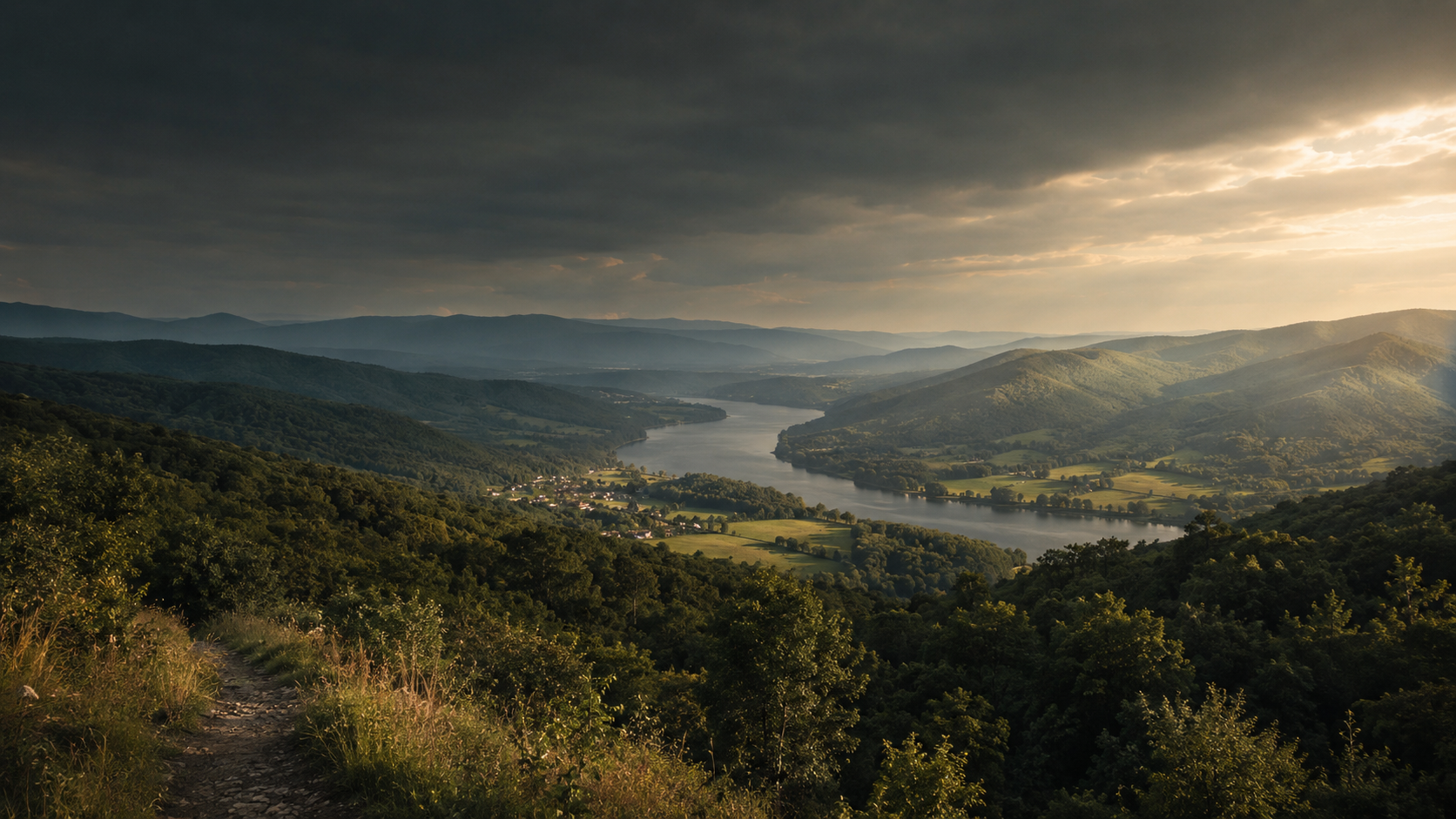
The lands, waters, people, places, and possibilities of a region central to the American story.
Appalachia is not only its highest places. It is ridgeline and river, public land and pasture, forest and farm, small town and working city, ancestral memory and emerging enterprise.
This page is built to help a visitor move from curiosity to understanding, from understanding to responsible participation, and from participation to measurable regional value.
Parts of Appalachia rest upon rocks more than one billion years old—a living region still being shaped today.
Ancient rock preserved in places such as the Blue Ridge carries evidence of mountain-building events that came long before the Appalachians visible today.
Continents converged, an ancient ocean closed and repeated collisions folded, lifted and transformed rock into a vast mountain system.
Water, weather, forests, wildlife and human communities keep reshaping the landscape. Appalachia is ancient, but it has never been still.
A range, a rock and a living landscape do not share one birthday. Deep time is best understood as a sequence—not a single age.
Different maps answer different questions. This page preserves those distinctions instead of forcing the region into one convenient outline.
The physical Appalachian chain and its related plateaus, valleys, watersheds and ecological systems extend beyond any one program boundary.
A federally defined economic-development geography of 423 counties across 13 states, home to about 26.6 million people.
A 14-state trail corridor running from Georgia to Maine through scenic, wooded, pastoral, wild and culturally resonant lands.
A living context shaped by place, work, family, migration, language, music, memory and self-identification—not one universally accepted line.
Outdoor discovery becomes more useful when scenery, stewardship, livelihoods, safety, access and local communities remain in the same frame.
Elevation shapes weather, habitat, settlement, viewsheds and the routes people take through the region.
National and state parks, forests, preserves and locally managed lands make stewardship inseparable from visitation.
Working land and hardwood forest carry livelihoods, food systems, family knowledge, biodiversity and visible change.
Water joins mountain headwaters to farms, towns, recreation, energy, drinking supplies and places far downstream.
Movement reveals Appalachia at different speeds—from footpaths and greenways to working roads and gateway towns.
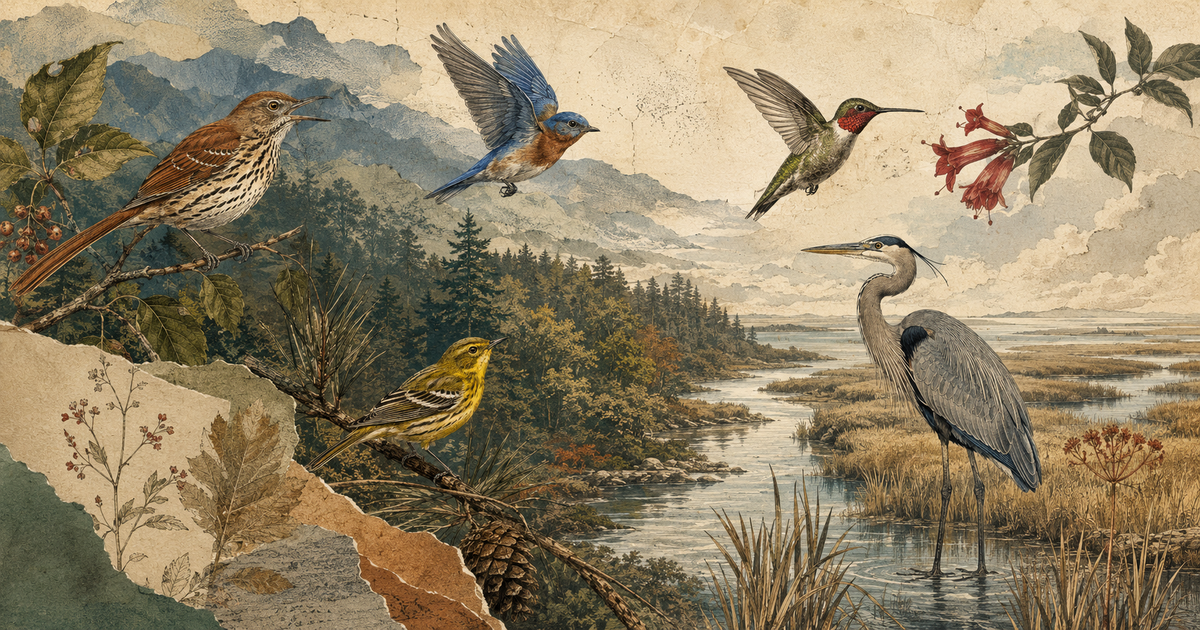
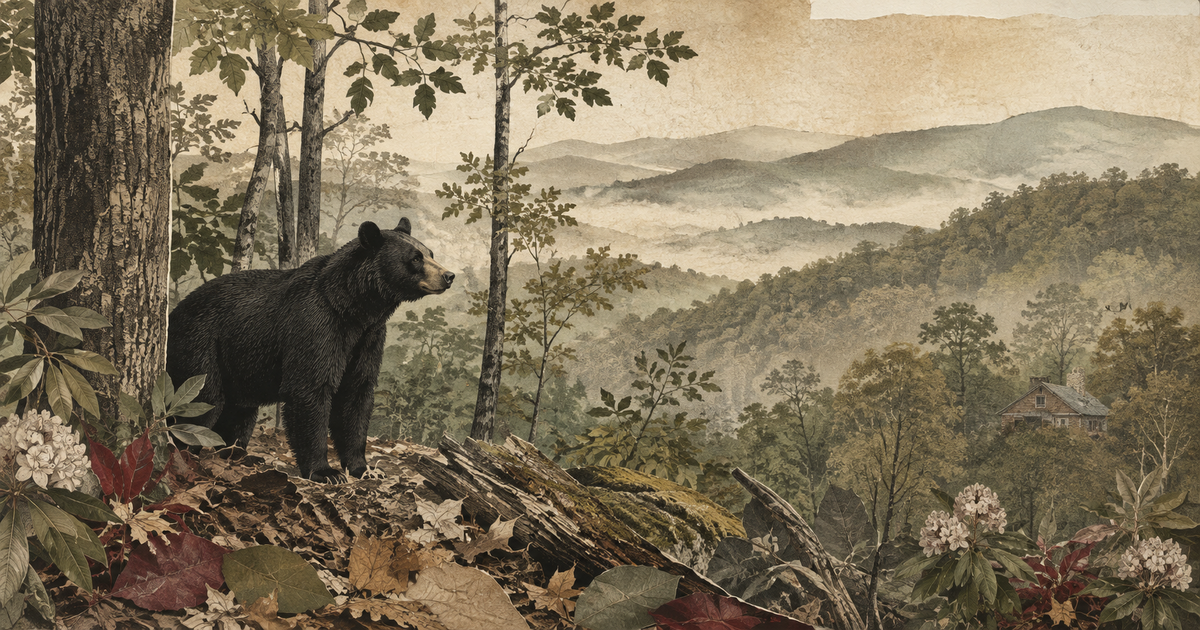
Birds, bears, foxes, pollinators, salamanders and native plants make habitat connection measurable and immediate.
The Appalachian Trail is a useful north–south discovery spine. It does not replace every definition of Appalachia; it helps connect fourteen distinct state contexts.
The strongest visitor economy does more than attract attention. It helps people find local businesses, understand the place, spend responsibly, stay longer and return with deeper context.
Lodging, food, guides, attractions, events, outdoor operators and main-street discovery.
Farms, orchards, forests, kitchens, studios, craftspeople and value-added regional products.
Founder-led companies, professional services, local retail and businesses entering new markets.
Searchability, websites, trusted knowledge, broadband, story systems and customer pathways.
Schools, colleges, libraries, labs, apprenticeships, field learning and institutional knowledge.
Land, water, housing, health, emergency capacity and long-term community continuity.
Market entry, export readiness, cross-border relationships and Georgia as an international gateway.
Local observation, ethical data, participant evidence, readership signals and repeated experiments.
Each platform has a distinct public purpose. Together they form a clearer regional discovery and participation system.
Helps America understand Appalachia through history, identity, landscape, evidence and deeper regional context.
Visit TheAppalachia ↗Helps people experience, connect with and participate in the fourteen-state Appalachian Trail corridor.
Visit OneAppalachia ↗Documents what is changing across the region through original observation, research, testing and measurable signals.
Read ORG Times Dispatch →Connect business, destination, regional, rural and market-entry capabilities into a system grounded in the client’s real environment.
These are city-level business gateways aligned to the fourteen A.T. states—not trailhead offices, endorsements or claims of formal affiliation. Availability and exact locations change; confirm directly with Regus before planning.
Why include workspaces? Regional growth needs places where local operators, visiting founders, researchers, investors and partners can meet without pretending the region is one centralized market.
Open the official Regus U.S. location finder ↗Three opening Dispatches establish the historical, geographic and geological context. Each includes sources, uncertainty and the next evidence needed.
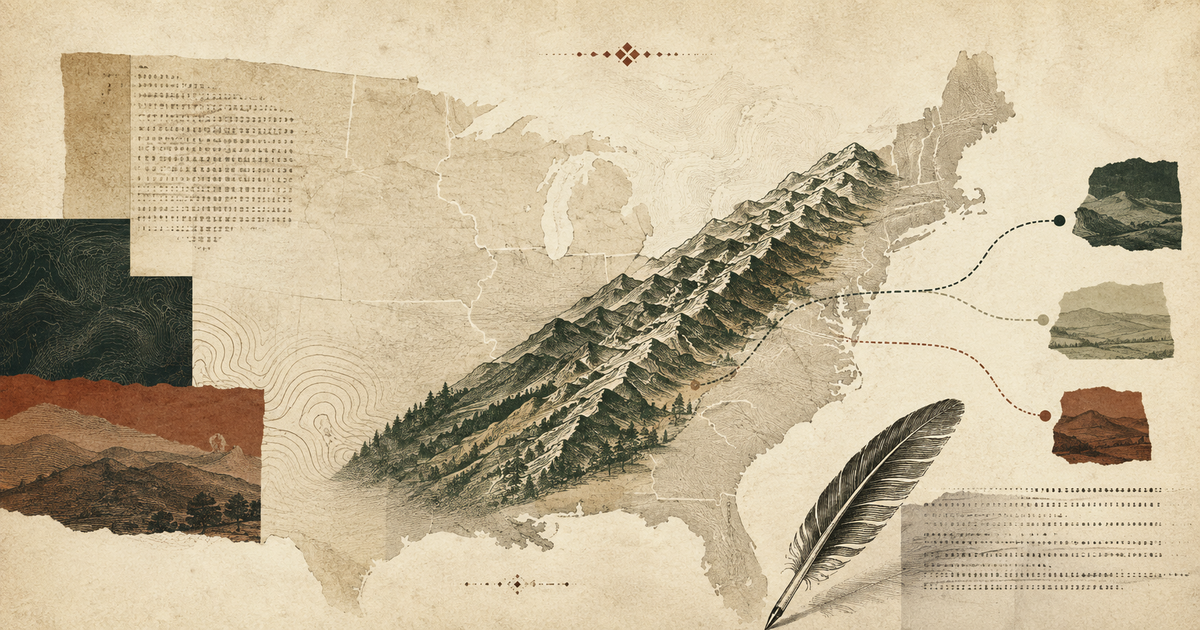
Washington Irving proposed Appalachia or Alleghania as a distinctive national name in 1839. Edgar Allan Poe later argued specifically for Appalachia—but the name was never officially adopted.
Read the sourced Dispatch →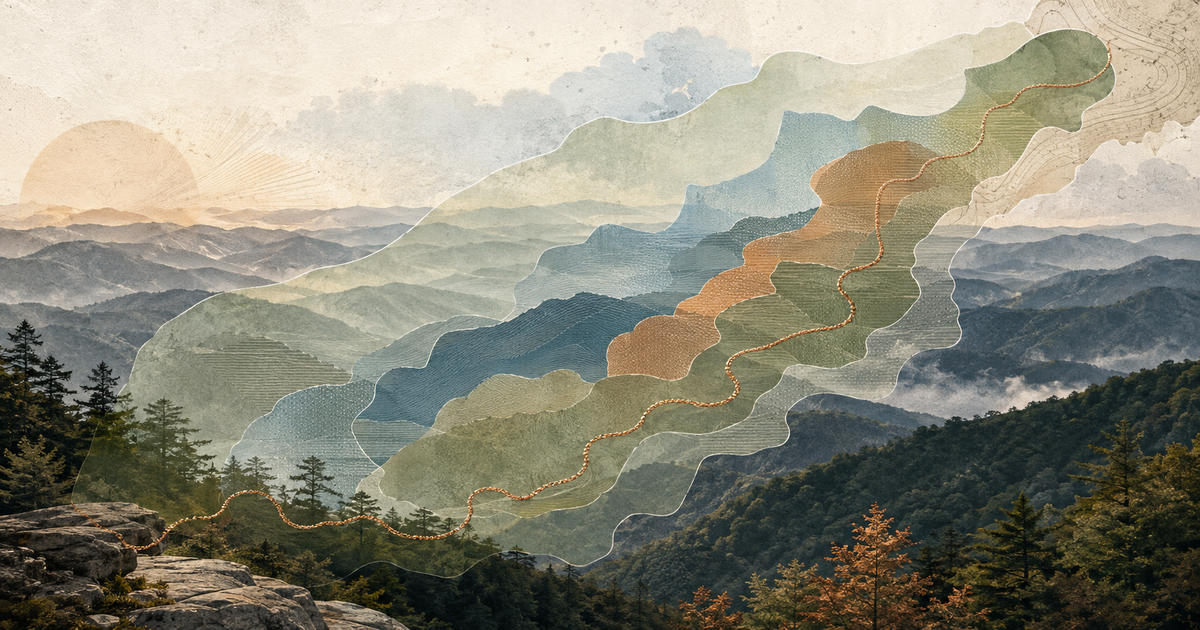
The Appalachian mountain system, the federally defined Appalachian Region and the fourteen-state Appalachian Trail corridor describe related—but not identical—geographies.
Read the sourced Dispatch →
The number marks a major transition in a much longer geologic history: continental collision had built the mountains, Pangea began to separate, the Atlantic opened and erosion continued shaping the ridges we know today.
Read the sourced Dispatch →Complete read-only browser editions by Lalit Devgan for readers, founders, educators, researchers and builders exploring context, formation and honest expression.
Eight connected volumes examining context in motion through leadership, systems, evidence, continuity and trusted manifestation.
Open the read-only book →
A philosophical and practical inquiry into the field before context, meaning, form and function emerge.
Open the read-only book →
Honest observation becomes contextual action, new experience and honest publication through six literary movements.
Open the read-only book ↗Read-only public access. Each complete work opens in its protected browser reader. Production masters are not offered here as EPUB or PDF downloads.
A Signal is a grounded indication that deserves attention: a place changing, a business emerging, a trail or watershed under pressure, an archive resurfacing, a community solving something, or a claim that needs correction.
Current reference set · August 19, 2026. Regional counts can change as programs and datasets are updated. Park conditions, business locations, trail access and workspace availability are operational facts that should always be confirmed at the primary source.
Appalachia can mean a mountain system, a cultural region, a federally defined economic-development region or a trail corridor. This page names the definition used for each claim instead of treating those boundaries as interchangeable.
The Appalachian mountain-building story unfolded through continental collisions roughly 500 to 300 million years ago. Some rocks preserved within the broader Appalachian landscape are more than one billion years old, so the mountains, their underlying rocks and the landscape visible today do not all share one birthday.
Both numbers are used in authoritative but different contexts. The Appalachian Regional Commission serves a 423-county region across 13 states. The Appalachian Trail passes through 14 states from Georgia to Maine.
This ORG Times gateway brings together land, water, parks, communities, history, culture, business, research and participation. It is a discovery field, not an official boundary map or travel authority.
No such claim is made. They are selected business-city gateways in the fourteen A.T. states. Workspace availability changes and must be confirmed directly with Regus.
Yes. Send a Signal with the local context, supporting link and permission to contact you. Submissions are reviewed; they do not guarantee coverage, endorsement or a commercial relationship.
ORG Times applies research-before-publish standards to editorial work. Sponsorships, services and paid placements are identified separately and do not purchase independent editorial conclusions.