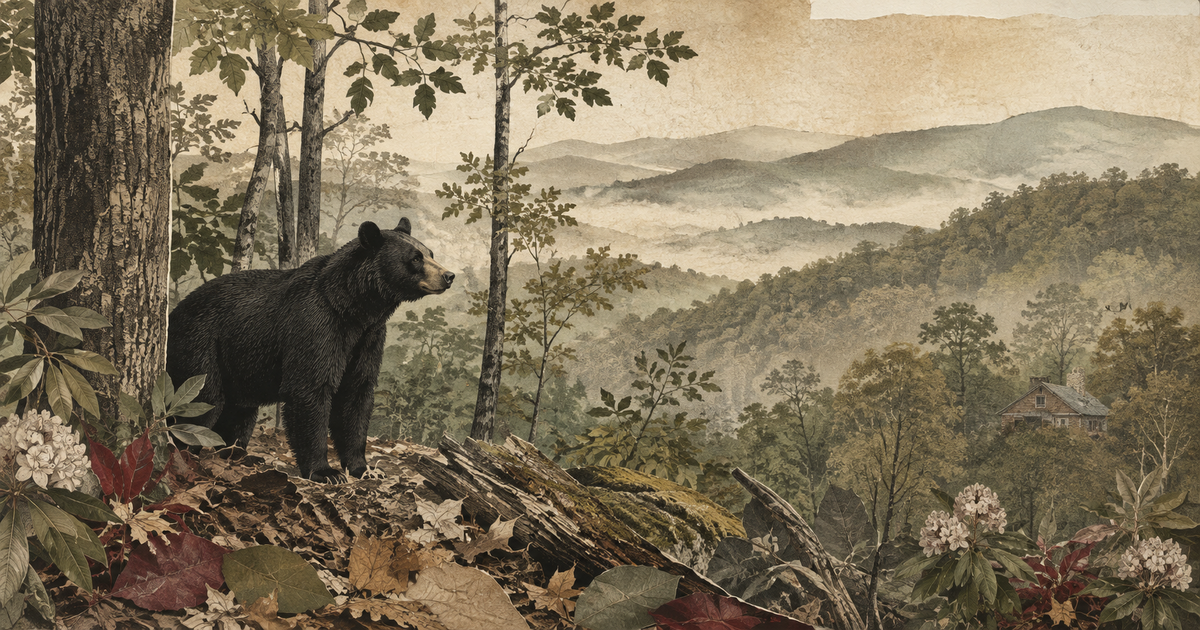
The American black bear is the only bear species found in Georgia. It is also one of the state’s clearest conservation recoveries. Georgia DNR reports that black bears were nearly eradicated from the state by the 1930s after habitat loss, unregulated hunting and illegal killing. Today, sound wildlife management has helped restore an estimated statewide population of about 4,100.
Recovery changes the human question. The issue is no longer simply whether bears can survive. It is whether people can live, travel and build in bear country without teaching bears to associate homes, vehicles, campsites or visitors with food.
Key points
- Georgia has three primary bear populations: North Georgia, central Georgia along the Ocmulgee River and southeast Georgia around the Okefenokee.
- Most preventable conflicts begin with unsecured food, garbage or other attractants.
- Never approach, feed or crowd a bear for a photograph.
- Local rules and park requirements may be more specific than general guidance.
A bear is not searching for conflict
Black bears are intelligent, adaptable omnivores. Their search for calories can bring them near fruit trees, bird feeders, grills, pet food, compost, livestock feed, garbage and food left in vehicles or camps. When human food becomes easy to obtain, a bear can lose the behavior that keeps both bear and community safer.
Calling this a ‘bear problem’ can hide the controllable part of the situation. The first response should be to remove the reward: secure trash, bring pet food inside, clean grills, store feed properly and follow local guidance about seasonal bird feeding.
Georgia’s three bear regions
Georgia DNR identifies three distinct populations: the mountains of North Georgia, a central population associated with the Ocmulgee River and a southeastern population in and around the Okefenokee Swamp. Bears can also appear between these regions, particularly as younger animals disperse.
North Georgia is part of a wider Appalachian bear landscape. Great Smoky Mountains National Park reports more than 1,900 black bears within the park and requires visitors to remain at least 50 yards away. Numbers differ across jurisdictions and years, but the shared principle does not: observe without changing the animal’s behavior.
If you see a black bear
If a bear has not noticed you, do not approach. Pause, appreciate the sighting and quietly move away. If it sees you, remain calm and back away slowly. Do not run. Give it a clear escape route and keep groups together.
Georgia DNR advises people to stand their ground, make themselves known and become assertive if a bear continues to approach. Bear spray may be an appropriate last defensive tool when carried and used correctly. Situations vary, so visitors should review the current instructions of the wildlife agency or public land they are entering.
- Stay well back and use zoom rather than moving closer.
- Never place yourself between a mother and cubs.
- Keep dogs controlled according to local rules.
- Do not stop traffic or leave a vehicle to crowd a roadside bear.
- Report persistent conflict behavior to the appropriate wildlife authority.
BearWise homes, rentals and destinations
Coexistence is an infrastructure practice. A single secure trash container helps; a neighborhood, campground or destination using consistent attractant controls helps far more. Vacation rentals and visitor businesses in mountain communities should explain bear-safe waste, food and vehicle practices before guests arrive.
Hospitality language matters. A bear sighting should not be marketed as a guaranteed close encounter. The responsible experience is the possibility of seeing wildlife at a safe distance in a landscape capable of supporting it.
Success is measured by wildness
The return of black bears is evidence that damaged relationships can change. Yet population recovery is not the end of conservation. The continuing work is to protect habitat connections, reduce vehicle strikes, prevent food conditioning and make human behavior part of wildlife management.
A thriving bear population does not ask people to withdraw from Appalachia. It asks us to inhabit the region with better boundaries. The bear should leave an encounter still wary of people, still able to forage naturally and still belonging to the mountain rather than to our photographs.