Every creation begins with an idea, but an idea rarely arrives in a finished form.
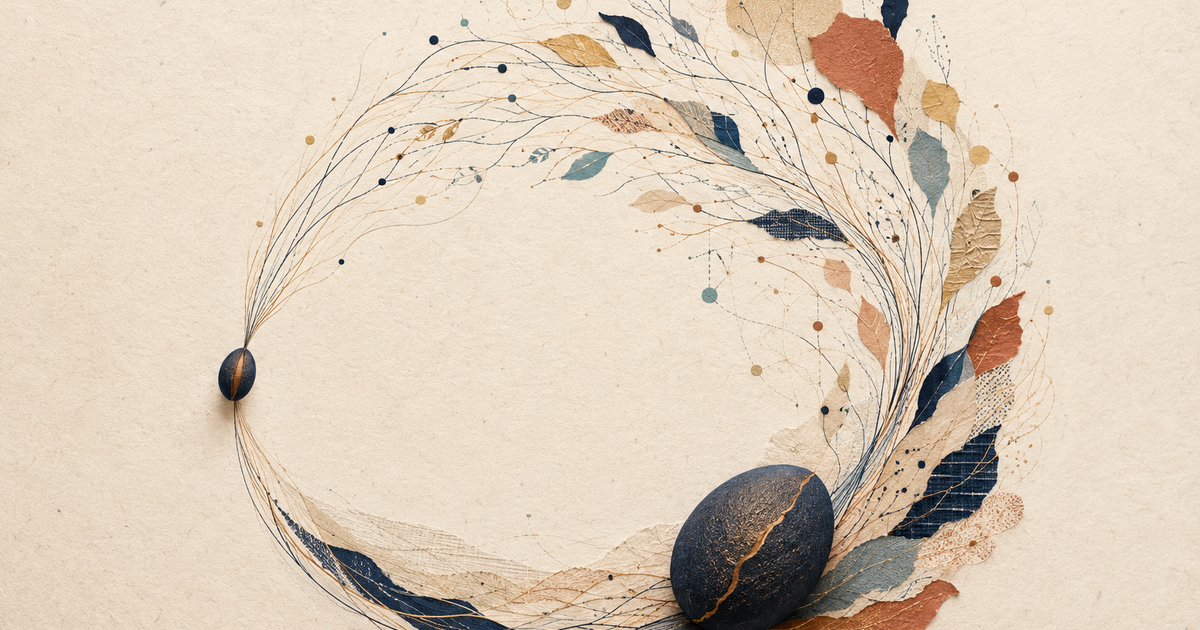
It may first appear as an image, question, need or possibility. As attention moves around it, the original idea encounters many possible directions. This movement can be represented as 1 → ∞ → 0 → 1.
Key points
- The first 1 is an idea visible enough to examine.
- Infinity is the field of possible connections and arrangements.
- Zero is the return to wholeness and central purpose.
- The returning 1 is a grounded form ready for practical use.
What this observation currently supports
- Status
- Original conceptual model · practical application in progress
- Observation
- Creative and system-building work often moves from one initial form into many alternatives before returning to a smaller set of grounded decisions.
- Supported claim
- The 1 → ∞ → 0 → 1 model can be used as a simple working metaphor for generating, filtering and forming ideas.
- Uncertainty
- This is a conceptual framework, not a claim that a mathematical law governs consciousness or creativity.
- Next evidence
- Apply the loop to documented projects and compare whether it improves clarity, selection, implementation and later revision.
Reading the loop
The first 1 is the initial form: a thought that has become visible enough to examine. Infinity represents the many connections surrounding it. Different arrangements, relationships and outcomes become possible. Imagination is not simply expanding outward; it is moving through combinations.
The 0 is a return to wholeness. It is the point where unnecessary possibilities can be released and the central purpose can be recovered. The returning 1 is a more grounded form. The idea has passed through inquiry and returned as something that can be explained, tested, built or shared.
A familiar example
A family planning a garden may begin with one intention: to grow food at home. Many questions follow. What should be planted? Where should it grow? How much time is available? These possibilities are considered, but not all are selected.
The family returns to its actual needs and resources, then creates a practical garden plan. The idea has not merely expanded. It has completed a loop and taken a grounded form.
Where AI can help
AI can support this same loop. It can generate alternatives, compare patterns, preserve context and help organize possibilities. Human judgment determines what matters and what should take form.
The ending of one cycle becomes the beginning of another. Once the garden exists, observation produces new knowledge, and the loop begins again. Grounded imagination is therefore not endless suggestion. It is the movement through possibility and back into meaningful form.