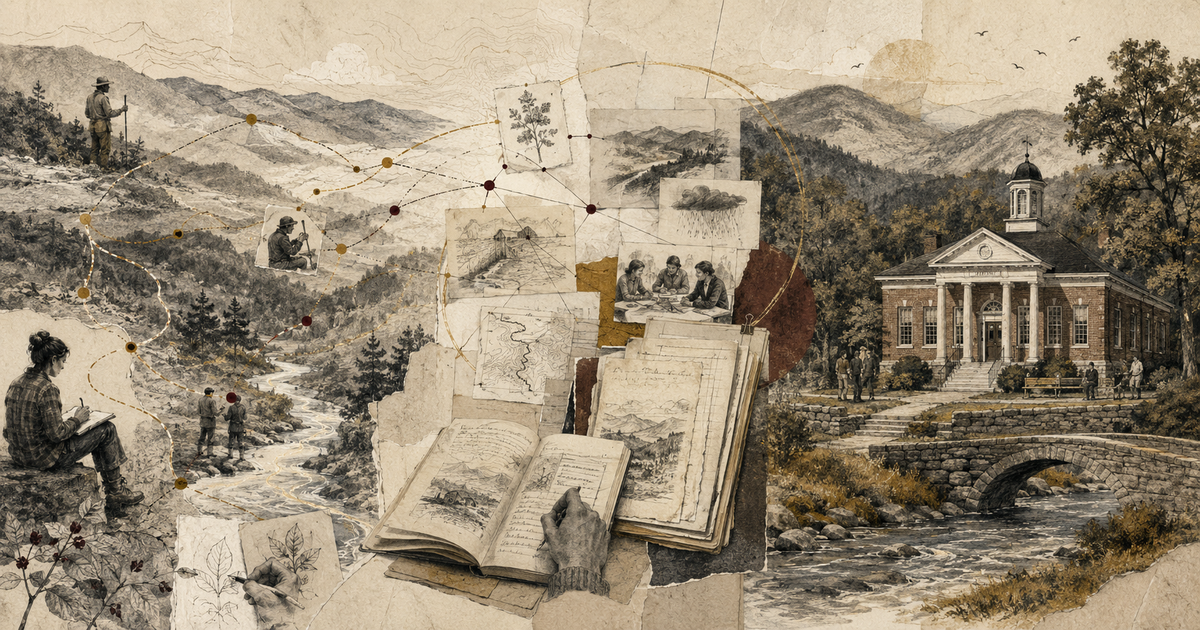
A publication can exist as a sequence of pages without becoming an institution. The pages may be attractive, timely and useful, yet disappear into an archive that remembers titles while forgetting why decisions were made.
Institutional development begins when the publication can preserve a relationship among observation, evidence, interpretation, action and learning. ORG Times calls the first unit in that relationship a signal.
Key points
- A signal is an observed change or possibility—not automatically a story, lead or conclusion.
- Lineage preserves how evidence and editorial decisions produced a public record.
- Learning must return to the originating context rather than remain isolated in analytics.
- Scale should follow demonstrated memory, governance and usefulness.
What this observation currently supports
- Status
- Working concept with live implementation evidence
- Observation
- ORG Times publications increasingly originate from recorded observations and return measurements or new evidence to the same operating context.
- Supported claim
- Signal lineage can create a more durable editorial memory than disconnected publishing activity.
- Uncertainty
- Long-term institutional continuity, independent adoption and regional decision impact have not yet been demonstrated.
- Next evidence
- Maintain a signal register, connect child signals to published records and review what decisions changed over a full editorial cycle.
A signal is smaller than a story
A new inquiry, measurement, public announcement, recurring need or field observation may be relevant without yet justifying publication. Calling it a signal preserves that early state. It allows the organization to ask what happened, how it is known, who may act and which boundary applies before deciding what form should follow.
Some signals become notes. Some become research questions, commercial reviews or nonprofit learning. Some remain observations. The discipline lies in not forcing every signal toward the same outcome.
Lineage turns activity into memory
When a signal becomes a publication, the relationship should remain visible: original observation, source, qualification, editorial decision, published record and subsequent evidence. This is provenance in practical publishing language.
The World Wide Web Consortium’s provenance model provides general concepts for representing the entities, people and processes involved in producing something. ORG Times applies the same underlying concern at an operating level: readers and future operators should be able to understand where a public claim came from and how it changed.
- Preserve the original observation.
- Separate evidence from inference.
- Record the accountable decision maker.
- Link the public output back to its source context.
- Return corrections and measurements to the record.
Learning is not the analytics dashboard
A page view, click or form submission is an observation about interaction. It is not automatically proof of demand, trust, impact or revenue. Learning occurs when the measurement is interpreted against the original purpose and changes a real decision.
If a controlled test produces one observable event, the supported claim may be only that the measurement pathway functions. Resisting the desire to inflate that result is part of institutional maturity.
Context determines the route
The same observation can belong to different institutional pathways. A community-learning need may belong to a public-benefit review. A paid service inquiry belongs to a commercial review. A factual regional development may belong to editorial consideration. The publication becomes more trustworthy when these routes cooperate without becoming indistinguishable.
For ORG Times, this means maintaining the separation between GiNi Inc.’s commercial publishing role and eRiverSpace InnoLab Corp.’s nonprofit mission. Connection does not erase identity, authority or accounting.
Scale is the consequence, not the premise
A system is ready to expand when its memory helps another person perform the work responsibly, its controls survive repetition and its results can be compared over time. Adding more automation before those conditions exist can scale inconsistency faster than value.
The quieter path is to let one complete cycle teach the next. Signal by signal, the publication develops not only a body of work, but a body of judgment. That is where a publication begins to become an institution.